Helping patients with hard-to-treat cancers to live longer, and better: inside NANOncolytics' plan to smuggle virus therapies past the immune system
Casla Conversations with Faith Nutter Howard, CEO and Founder of NANOncolytics Millie Hurst, 9th September 2026
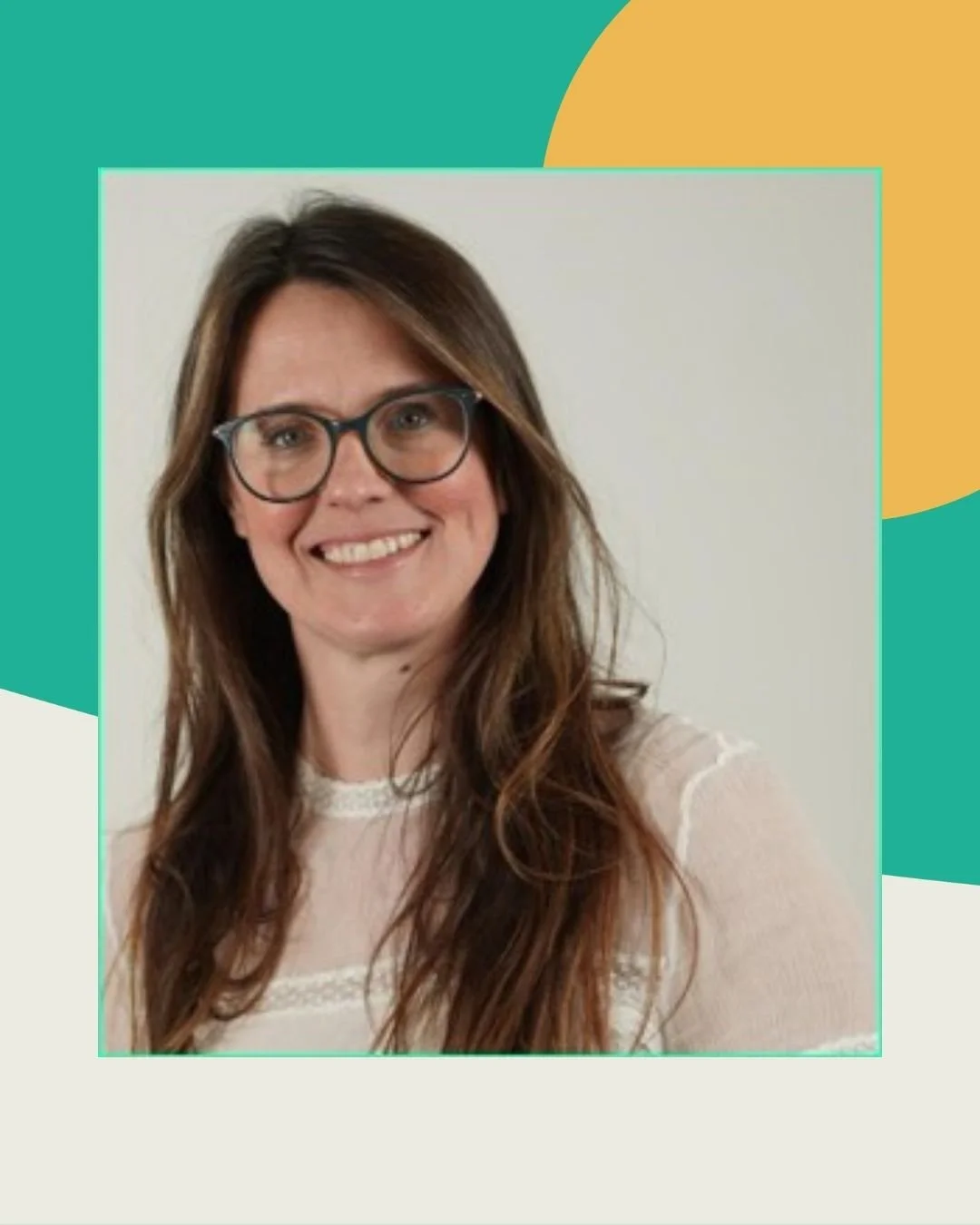
In a lab in central Sheffield, a small team is using viruses and plant proteins to develop less invasive cancer therapies. Faith Nutter Howard, who founded University of Sheffield spin-out NANOncolytics in 2022, describes the treatment she wants to make possible:
'It's not disrupting your entire life – it becomes part of your routine,' she says. It's almost like having an asthma inhaler.
'Yes, it's always there, but it means you can carry on your life as normal.'
NANOncolytics' platform helps expand the reach of oncolytic virotherapy to patients and cancer types not currently served, delivering it directly to the tumour. 'We're effectively the Deliveroo of virus therapies,' says Faith.
We spoke to Faith about the science behind it, why the answers to some of the hardest problems in oncology can be found in plants, and the device that carries her mother's name.
Nature's attack dog
Oncolytic virotherapy was first approved in 2015. It uses viruses that kill cancer cells directly by replicating inside them, while also exposing the tumour to an immune system that had previously been ignoring it. Unlike a fixed dose that only depletes, the virus manufactures more of itself where it's needed.
Faith describes oncolytic viruses as 'nature's attack dog,' and they're great at their job – killing cancer cells and leaving healthy ones alone. 'They pack so much power that you just can't replicate synthetically,' she states. 'The fact that they can kill cancer cells, but then in doing so, they stimulate your immune system to join in – how do you get a drug to do that without years and years of research?'
The key limitation of oncolytic virotherapy is that the immune system is very good at recognising a virus and clearing it out before it can reach the tumour.
The bubble
NANOncolytics packages the virus inside a bubble-like particle that hides it from the immune system. 'That then allows us to put them into the bloodstream, where they can travel to various parts of the body without alerting our immune systems that they're there. Then, they can go ahead and release the therapy right where it's needed.' It also means it can be delivered at a much lower dose, no surgery is involved, it’s deliverable to tumours that can’t be reached with a needle, and it’s repeatable if the tumour regrows.
Currently, most cancer therapy works by flooding a patient's system. You put enough of a drug into the bloodstream so that a useful amount survives the journey to the tumour, and accept the side effects as the price of getting it there.
The company's headline result is a 50% survival advantage, at a thousand times lower dose. Delivering it through the bloodstream is also what makes repeat treatment possible: without surgery to get the therapy into the tumour, it can be re-administered.
The technology is an enabling one rather than a therapy in its own right. NANOncolytics partners with biotechs and therapy developers to encapsulate their treatments – a model that generates revenue early and derisks the path to a therapy of its own, which Faith says is ten to fifteen years down the road.
The company is now moving from spin-out to commercial validation, working with early partners to test the platform across several applications while developing its next generation.
Leveraging nature rather than replicating it
The bubbles are built from conventional materials but also plant proteins – many of them coming from plants we eat – and the reasoning is that we know they're compatible with people, and a lot of these proteins have other roles, like boosting immune activity.
The nanoparticles used in the Covid vaccines are safe, but they carry no biological function of their own, so anything you want them to do has to be bolted on. Plant-derived materials, on the other hand, tend to arrive with capabilities already. Some, Faith explains, have the potential to be great targeters, which deliver the virus to the tumour once it’s in the bloodstream.
Viruses come with their own tissue preferences, written into the receptors they use to get into cells (this is called natural tropism). 'They might like to go to one organ over another. I don't have to spend my time putting on antibodies to make them go to the breast for breast cancer, for example.
'So it's leveraging that, really. There are lots of source materials that might have a targeting agent, which would mean we don't have to use all these synthetic components,’ Faith explains.
'The future lies in using nature to provide the answers to some of these difficult questions.'
Nothing in the approach forces anything. Natural proteins shield natural viruses so the viruses can do what they already do, in the place they're needed.
Living, not surviving
Lower doses mean fewer side effects, and that's the whole point. 'Ultimately, for us the goal is giving patients with some of the hardest-to-treat cancers a greater chance of living longer, but also living better. Whilst you're on that treatment, you still have that quality of life.'
Manufacturing viruses at conventional, large doses is slow and expensive, which keeps trial batches small and keeps patients waiting. 'Not only does it mean that it's kinder to our patients,' she says, 'but we hope it will also mean that accessibility to newer treatments will be accelerated.'
And if it all works out as Faith hopes, treatment for a patient in fifteen years' time will be outpatient appointments, an hour at a time, and a high quality of life. 'Immunotherapy and gene therapy will have been game changers. Surgical administration is still required for some therapies, but we aim to change this so with all therapies, you can drop in, get your therapy and go home an hour later.’
She is careful not to promise a cure, though: 'Cancer is part of nature, and it's really clever.' She's equally careful about the language we use.
'That's the important thing I really want to stress – it's living, it's not surviving. We need to move the language away from it being a battle. I'd love everything to be cured, and we might get there one day. But living with it is something we can definitely achieve.'
MAVE
The device at the centre of the company is called MAVE: manufacturing advanced virus encapsulation. It is also Faith's mother's name.
Faith lost her to cancer thirty years ago, and the thing that keeps pulling her back to advanced cancers is how little has changed since.
'Thirty years later, we still don't really have many new options compared to back then. So it's crying out for a disruptive technology – for patients past and present. They deserve that. 'MAVE is very close to my heart. But it's also something that I feel has a real chance at making some impact.'
Quick-fire
Where does the name come from? 'Nano, because viruses and nanoparticles are both at the nanoscale. And oncolytic – onco for cancer, lytic for lysis. So it's basically cancer cell death.'
Tool you can't live without? 'My MAVE device. The company wouldn't be the company without MAVE.' She also thinks it looks the part: 'I have a feeling it looks a little bit like the trojanhorse that it builds. There's an angle of it where it looks like the bit in the horse's mouth.'
We suggested she cross out 'aspirational.'
'That's my own insecurity coming through. But I'm here. I'm living it. I'm doing it.'
To learn more about NANOncolytics, you can head to their website and follow Faith Nutter Howard on LinkedIn.