

Casla Conversations... with Gregory Meyers, CEO of TreeStock
Millie Hurst, 3rd February 2026
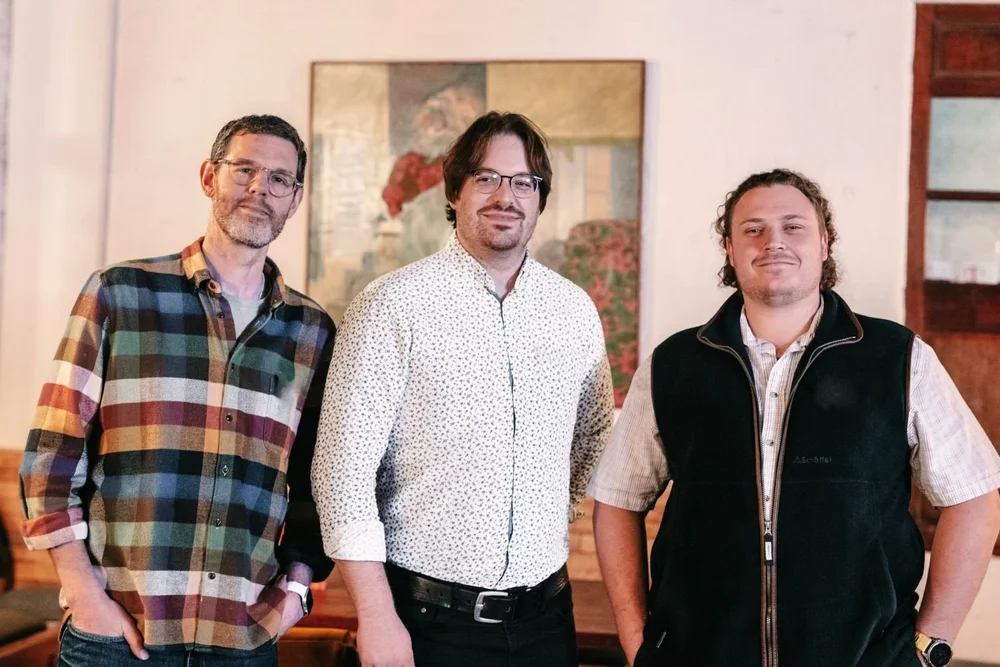
Left to right: Morgan Walker, Gregory Meyers, Tristan Campbell-Reynolds
TreeStock has developed a platform that uses AI and satellites to create a digital twin of every tree on the planet, delivering rapid insights about trees across entire forests. The tree-level insights are then used by land owners and agents for valuation, management and sustainability analysis.
‘It’s not an exaggeration to say that current standard tree surveying methods could have been used 500 years ago,’ says Gregory Meyers, CEO at TreeStock. ‘We’re talking clipboard and tape measure.’
‘I'm really interested in ways we can apply novel technologies to solve problems,’ says Gregory. ‘I was CTO of my previous company, and I thought, “Okay, I have a vision of what I can do. Let me start up my own company.” From day one, that was an engagement with Scottish Forestry, which immediately set me on this path.’
How do you make a digital twin of a tree?
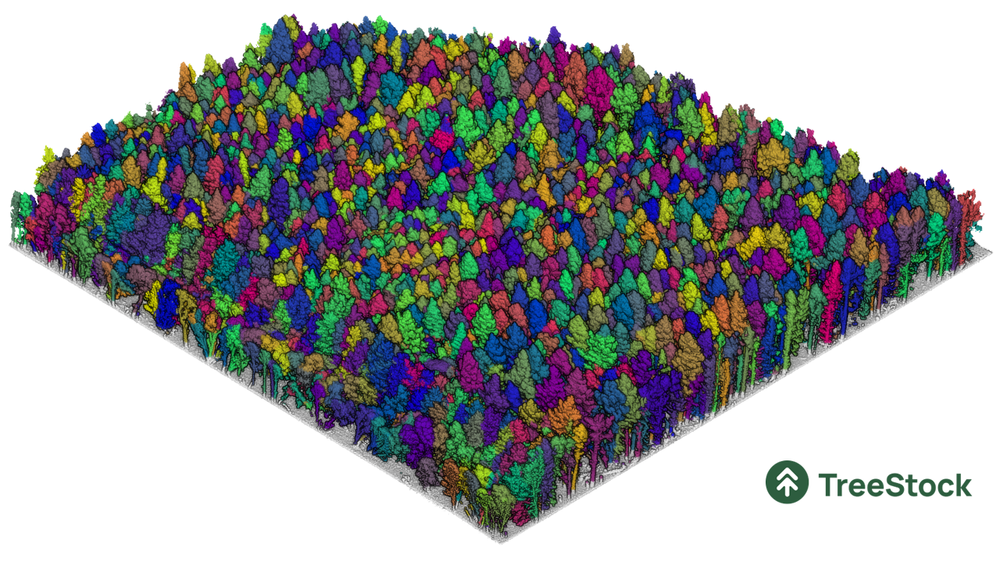
‘Digital Twins, and thus tree digital twins are often misunderstood as just creating a 3D model of the trees. The more interesting thing that we want is the actual properties of a tree, and the digital twin changes over time as that tree changes in the real world,’ Gregory explains.
‘We use the information we capture to determine fundamental metrics, such as height or the total timber volume, and then some of the more complicated metrics, like its carbon sequestered, health and whether it’s been affected by pests or disease.
‘We use remote sensing, which includes drones and earth observation. Earth observation is basically satellite imagery, and you can get that on different bands that our eyes can't see, so we see in optical, but other bands can pick up things like heat and plant health. ‘Because TreeStock has been able to drill it down to digital twins of individual trees, we can provide the people managing and maintaining trees with highly trustworthy, usable data. ‘They are able to trust us because we've got each tree counted and measured. We're not vaguely estimating these things.’Working with AI
‘The number one thing I've learned is that with most AI challenges, usually the solution is people and processes with a little sprinkle of AI in the right way - and that's the case in TreeStock,’ says Gregory.
‘Although we have AI powering our processes, without interpreting that output in a meaningful way that the end users actually find useful, it's meaningless. It's all about the user-centric process and design that we have kept top priority, regardless of what is happening under the hood.What was the last great piece of content you saw?
‘My feed is primarily dominated by everything tree-related now, but what surprised me is the sheer volume of articles about trees and forests that are deeply personal to individuals.
‘I honestly couldn't count on my hands the number of articles I've seen along the lines of, “Family in tears after their garden cherry tree is chopped down.” Such an emotionally strong connection that it’s been enough to make headlines. ‘As someone whose whole life now revolves around trees, it still surprises me just how personally and emotionally invested people can be in nature.’Favourite tree fact?
‘There are some tree species that have incredible underground connections through fungi. The fungi links tree roots together, letting them share nutrients, water and chemical messages. Trees even use these networks to help their neighbours and send warnings about threats like drought, disease or insect attacks.’
‘There's a tree which grows in tropical parts of Central and South America, that has fruit capsules that literally explode when it's ready to spread its seeds. The seeds fly out at 150 miles per hour to send them far away. Nature is amazing.’