'I get on with it': a career built on running towards change
Casla Conversations with Charlotte Hill, fractional and interim marketing leader Millie Hurst, 13th July 2026
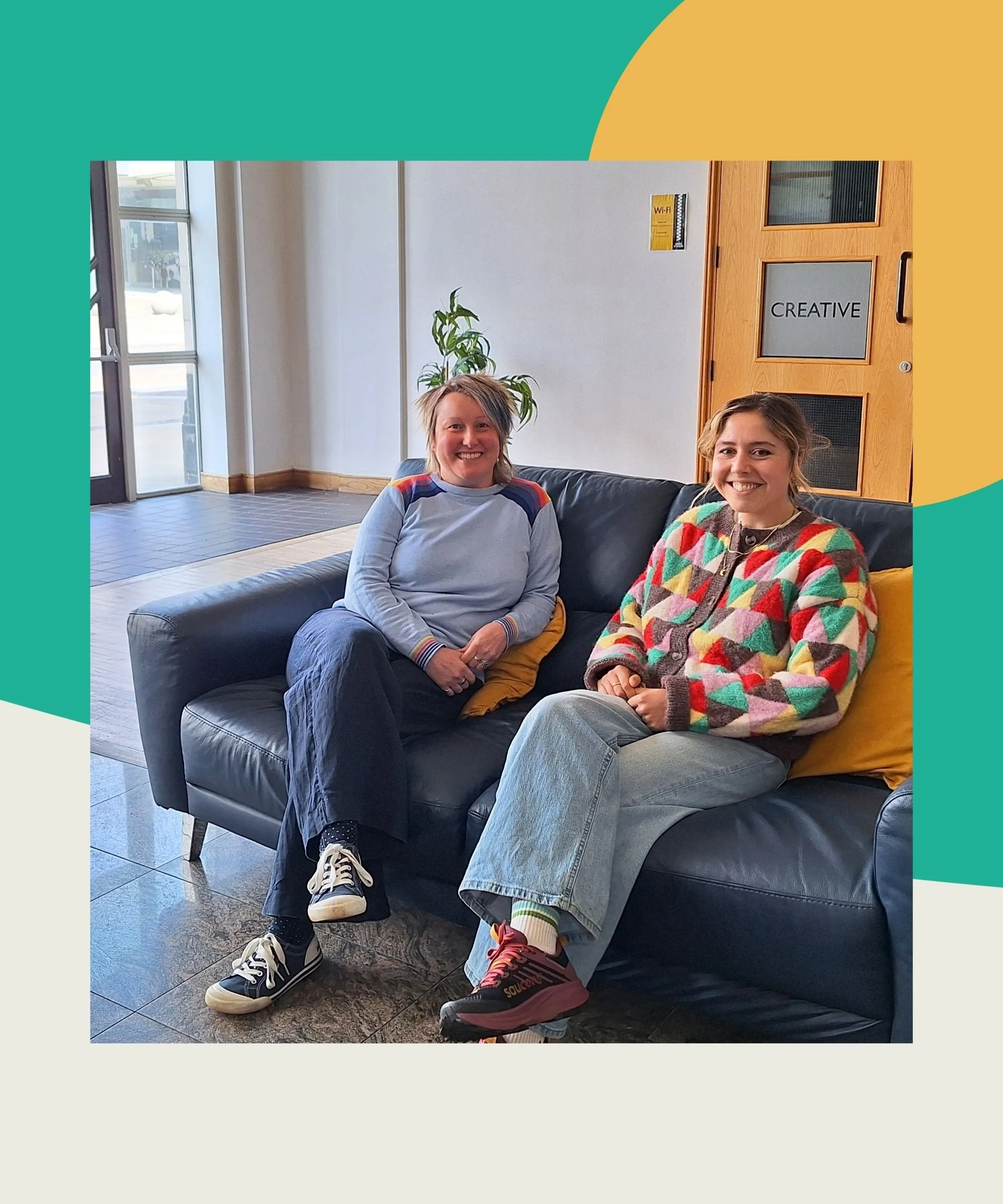
Charlotte Hill wanted to be a vet. What got in the way, she says, was ‘a distinct lack of being very good at physics or maths.’ So she studied psychology instead, took ‘a random job after uni,’ and fell into marketing – the way many of us do. The psychology never left: an interest in people and how we behave is still fundamental to her work.
Ask her friends or her partner whether she deals well with change, and Charlotte says they'd tell you no. ‘I'm not a person that's good with change,’ she says. ‘But for some reason, in my professional life, I love it.’
Constant change is the key thread running through a career that has spanned education and technology, client side and agency side, B2C and B2B, and finds her, right now, at another crossroads.
'I just get on with it'
Charlotte spent seven years at Doncaster College – a long stint in an industry where people rarely sit still. She stayed, she says, because she kept moving: from marketing coordinator, to acting head of marketing while the incumbent was on maternity leave, to an unusual spell job-sharing the role. ‘It was very hard to know which hat I was wearing at any one time,’ she says. The team did genuinely creative work along the way, from manga-inspired prospectuses to a ‘big fish in a small pond’ campaign and squirty fish handed out to prospective students. She left when yet another restructure loomed and the room for that creativity started to narrow.
The move into agencies was a jolt. ‘The switch from client side to agency was very different,’ she says – not doing the marketing herself any more, but managing accounts, winning business, and pitching. It was also where brand and strategy became her thing, working with clients from HSBC to Nokia as she moved from agency to agency..
Most recently, she was at the East Midlands Chamber, where the pace of change was even more swift: ‘I had three different line managers in the 12 months I was there.’ None of it seems to have thrown her off balance, though. ‘I don't know what it is about me,’ she says, ‘but I think I just get on with it.’ She calls herself ‘a solutions person who's good at filling in the blanks.’ The feedback from senior leaders at the Chamber, she says, was that ‘we didn't anticipate someone could come in and have this level of impact in such a short time.’
The tools Charlotte reaches for
If change is the one constant in her career, Charlotte has a handful of instincts she reaches for when things are uncertain.
The first is to keep it simple. This is the biggest lesson of her career, and she credits a global client for teaching it. ‘When I started working with Nokia, I had three pages of acronyms in my notebook,’ she says. That was fine – necessary, even, for an agency servicing the account – but ‘your customers don't need that.’
The trap, especially in B2B, is ‘telling everybody everything,’ when what people on the receiving end actually need is what your product does and why it matters, said clearly and consistently over time.
At Casla, we agree that it’s important to identify your content pillars and focus on communicating them consistently, without worrying about repeating yourself. People won’t see every piece of content you create, and even if they do, it’s still just one post in a sea of content they scroll through every day. So sharing the same, simple message in the same branding and colours over time is key – building brand awareness and trust.
The second is to follow the nugget. When our conversation turned to customer insight, Charlotte lit up at being called a marketing detective: ‘I feel like I'm Inspector Gadget.’ She started out at a behaviour-change agency, ‘which gave me a really good grounding in understanding what customer insight truly is.’
Insight, for her, isn't the data itself – it's the small thing the data throws up. ‘A tiny, throwaway comment that a customer might make in an interview or something that comes out of a survey’ can spark it, then you go away and test whether it holds. She reaches for the image of a detective drama: the board, the photos, the pieces of string joining them up.
‘The insight isn't just the data, it's about your products, your company and the target audience and what you yourself know from your own experiences within marketing and the rest of your team,’ says Charlotte. ‘All of that comes together to give you the insight that can be the little spark that unlocks a great idea.’
The third is Charlotte’s own analogy: keep filling up the glass. ‘Think of your marketing and all your channels like a glass of water,’ she says. ‘If you can keep filling up that glass, the point at which it overflows is the point at which your customers will buy from you, or interact with you, engage with you. But you need to have all of those elements to make that glass of water overflow.’ It starts with proposition, brand and messaging, she says – and from there you turn on the taps: your channels, your content, your social, your digital.
‘Brand strategy is the business strategy brought to life’
Charlotte knows when to zoom out and when to hone in on the details. ‘I'm a big picture person,’ she says. ‘I really like to understand the organisational challenges of the business that I'm working in and that intersection around how brand feeds into its commercial success,’ Charlotte says.
‘Somebody once said to me, “brand strategy is the business strategy brought to life” – and that really resonated with me. I really enjoy understanding how brand drives commercial outcomes.’
Charlotte believes it’s important to understand the purpose of your organisation and who you are for your customers, and this understanding steers the direction of the business, and how to drive business growth.
'I'm excited to find out'
When we spoke, Charlotte was between roles and about to sit down with a career coach for the first time – a prospect she described with characteristic honesty. ‘I'm not very good at being self-reflective,’ she says, and what she's after isn't answers so much as structure: a bit of a mirror held up to a career she mostly describes as things she ‘just got on with.’ There are a lot of directions she could take, including going out on her own, and something Sheffield-focused appeals.
For someone who says she hates change, she sounds remarkably comfortable standing in front of it. ‘I don't quite know what’s next, but I'm excited to find out.’
Quick-fire
If you could go back to the start of your career and tell yourself one thing? ‘I'd reassure myself that I'm going to have a lot of fun – because it has been fun.’
Biggest marketing myth? ‘That brand isn't commercial.’ Even multi-million-pound decisions, she points out, often start from familiarity and emotion. ‘If you want to be top of mind, that's where your brand comes in.’ Her hunch is that the flood of AI-generated content will push audiences back towards it: "some of the AI slop is going to drive audiences back to craving authentic, brand-driven stuff." It's a point we definitely agree with at Casla.