From the classroom to the boardroom at an AI software company
Casla Conversations with Georgia Walker, Marketing Manager at Napier AI Millie Hurst, 13th May 2026
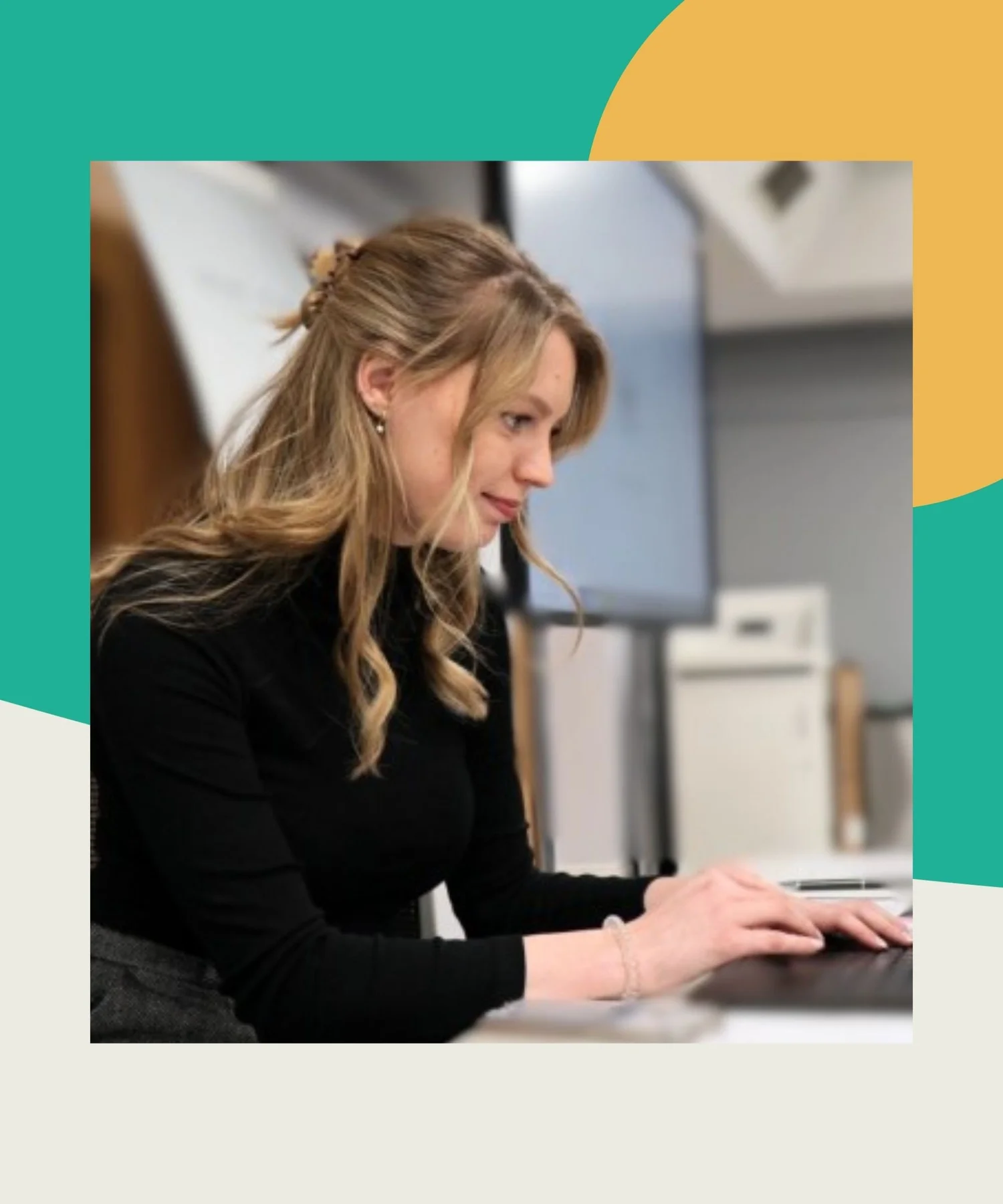
It quickly became clear to me on our Google Meet call that Georgia Walker is the kind of person who gets things done. In her current role at Napier AI, she's in charge of marketing strategy, running large in-person events, and generally 'keeping things moving forward.'
‘Diamonds are made under pressure,’ Georgia says. ‘If I'm too relaxed, I stagnate - I think that's why I've stayed at Napier AI for so long.’
She shared some practical insights from her career path that’s taken her from teaching business studies in schools just outside of London, to working as a marketing manager. It was great to hear her unique perspective on ABM, LinkedIn, marketing trends, and content strategy.
Lessons from the classroom
Georgia had no interest in marketing while she was at university, where she studied Business and Management, admitting that she found it ‘very stale.’ After graduating, she worked in B2C marketing before she completed a PGCE and became a teacher, which gave her many skills that come in handy in her marketing role today.‘There's a type of confidence you learn from being in front of 30 kids that have no reason to listen to you,’ she says. Aside from self-confidence and the ability to get a room of young people on side, she learned first-hand that we all consume information differently.
For example, she once planned a lesson with mind maps, which she’d assumed her class would find fun, but when it came to delivering the lesson, the students really struggled with it. Instead, lessons centred around real-life examples, like Cristiano Ronaldo’s transfer to Manchester United, worked much better. ‘We looked at why that was a marketing and business deal, rather than just a football and skill deal,’ she says. ‘A lot of the kids supported Manchester United in that area.’
Similarly, Georgia says that as marketers, we often assume that we know what people want to consume and how they want to consume it. ‘We’re wrong more often than we think,’ she comments. Instead of making assumptions, Georgia recommends listening to perspectives across the company from product teams to sales teams, as well as doing your own research.
She points out that for one person, a video about your services might really resonate, while the next person will prefer reading a blog post about the nuts and bolts. For another, it could be a social post or an in-person event that connects with them.
Georgia also applies the idea that we all consume information differently to how she prepares for meetings with her senior leadership team. ‘Our CEO will often only have 10 minutes to talk, and I’ll need to be ready to answer his questions about the running order of the day, but specifically where he needs to be and when rather than a large overview as he may have multiple priorities. Whereas if I’m talking to my Chief Customer Officer, she’ll want to know about the seating plan, and how we’re enabling customers to get the most out of the event,’ Georgia adds.
And just like the teacher who starts out strict in September and is actually quite fun by the end of term, Georgia observes that in the workplace and with client relationships, you might start out communicating very formally, and then relaxing once you’ve earned trust, although maintaining a level of professionalism in your delivery is key.
What's working in marketing right now?
Napier AI is named after the famous mathematician John Napier, and Georgia describes marketing as being a bit like an equation. ‘I enjoy seeing how different channels add up together - how content works alongside an event and social media,’ she says. ‘It’s like a formula you’re moving around to see what works.’
Practical content
‘We're doing a lot more technical content, such as regulatory responses and things that our audience actually needs to consume. We spend a lot of time converting information from technical, legal language into “What does this actually mean for you?” I like practical content, I think it’s really valuable.’Social Georgia advocates social posts that invite engagement and interaction, rather than a one-way, ‘megaphone’ approach. ‘Some data, a poll, or just people that other people can engage with is what will make the difference on social media,’ she says.
The most important thing for Georgia is that there’s going to be a good ‘energy-to-outcome’ ratio, recalling how in the past, her team had wasted time making videos with staff that didn’t really want to be on camera, with bad lighting and microphones not working.
‘I'd rather someone write a really amazing blog or get them to post some pictures of them on-site, which we can then share on socials. Your people are the most valuable thing to be utilising on social media,’ says Georgia.
From Georgia’s experience in a niche space, paid LinkedIn works when retargeting already-engaged prospects, but it doesn’t work for cold lead acquisition. ‘It tended to positively influence deals, but lead acquisition felt a bit dead on LinkedIn.’
In-person
For Georgia, in-person events and meetings are absolutely key to building trust. ‘The sales guys are always telling me the same thing - that they need to be in person with prospects, and that they need to build trust.‘Face-to-face interactions create an emotional connection, and mean that sales can learn about buyers’ lives.’ Georgia also emphasises the emotional pressure buyers are under and the high stakes involved. ‘They could risk their job if they make a wrong decision,’ she says. That’s why in-person events and meetings are so important.
Targeting pain points by persona
ABM can be light-touch, where you identify a list of top accounts and start some marketing efforts centred around those organisations. But Georgia is a little sceptical about ABM for smaller teams because it can be high-energy and potentially low-reward without the right tools or headcount. Instead, she suggests targeting pain points by persona.Quick-fire
Favourite B2B marketing trend? ‘I feel quite pessimistic about trends. If you think about the pivot it takes to hop onto a trend and the cost and the deviation from a program you've been working on for months that could finally be starting to build momentum - to pivot to something else... It can feel risky,’ Georgia explains. ‘We've hopped on a trend recently - we tried to do it a few years ago, and it didn't work, so we're trying it again, which is lots of small, intimate in-person partner events. Focused on quality information sharing and relationship building, over a mass marketing approach. ‘They seem to be picking up this year, but it can be hard to quantify the outcomes or compare against other types of activity directly.’
Biggest marketing myth? 'That branding isn't important,' says Georgia. 'I massively disagree - I think branding is misunderstood. 'The brand and the colours are the first thing you see. When I think of Canva, I see their colours and their style. FedEx has their integrated arrow and that communicates the subliminal messaging. Brand is way more impactful than people give it credit for, and it's actually quite sad how undervalued it is. 'Napier AI has a strong brand visually. Yellow is a bit of an unusual colour in our space, but I think it's super impactful. The companies that do branding really well are the ones you remember.'
Napier AI delivers next generation anti-money laundering and financial crime compliance software, transforming compliance from legal obligation to competitive edge for financial institutions.